Workflow Transformation.
What if training isn’t the answer?
I don’t start with “what should we build?” I start with “what is preventing people from performing at their best?”
Most performance gaps aren’t knowledge gaps. They’re workflow friction, unclear expectations, missing reinforcement, tools that fight the work, or managers with no room to coach. Training is one intervention — rarely the highest-leverage one.
The methodologies come later. First, the diagnosis.
“I don’t begin by asking, what should we build? I begin by asking, what is preventing people from performing at their best?”
Everything else — methodology, modality, technology — follows the diagnosis.
Why does performance still fail?
Organizations spend billions developing people.
Yet performance often fails to improve. The investment lands in content libraries — not in the workflow where work actually happens.

The methodology follows the problem — not the other way around.
HPT, Learning Science, Systems Thinking, HCD, Change Management, and AI aren’t a checklist. They’re lenses I pick from once the diagnosis is honest. Tap any framework to see its purpose, strengths, limits, and how AI reshapes it.

Where the disciplines meet the work.
Three engagements — different contexts, different methodologies. The same way of thinking.
Global Sales Bootcamp
New sellers were ramping in nine months. The business needed three.
Confidence — not content — was the blocker. Sellers were over-prepared on product, under-rehearsed in conversation.
I designed a hybrid readiness system: pre-work, live cohorts, AI sparring partners, rubric-scored practice, and manager-led reinforcement.
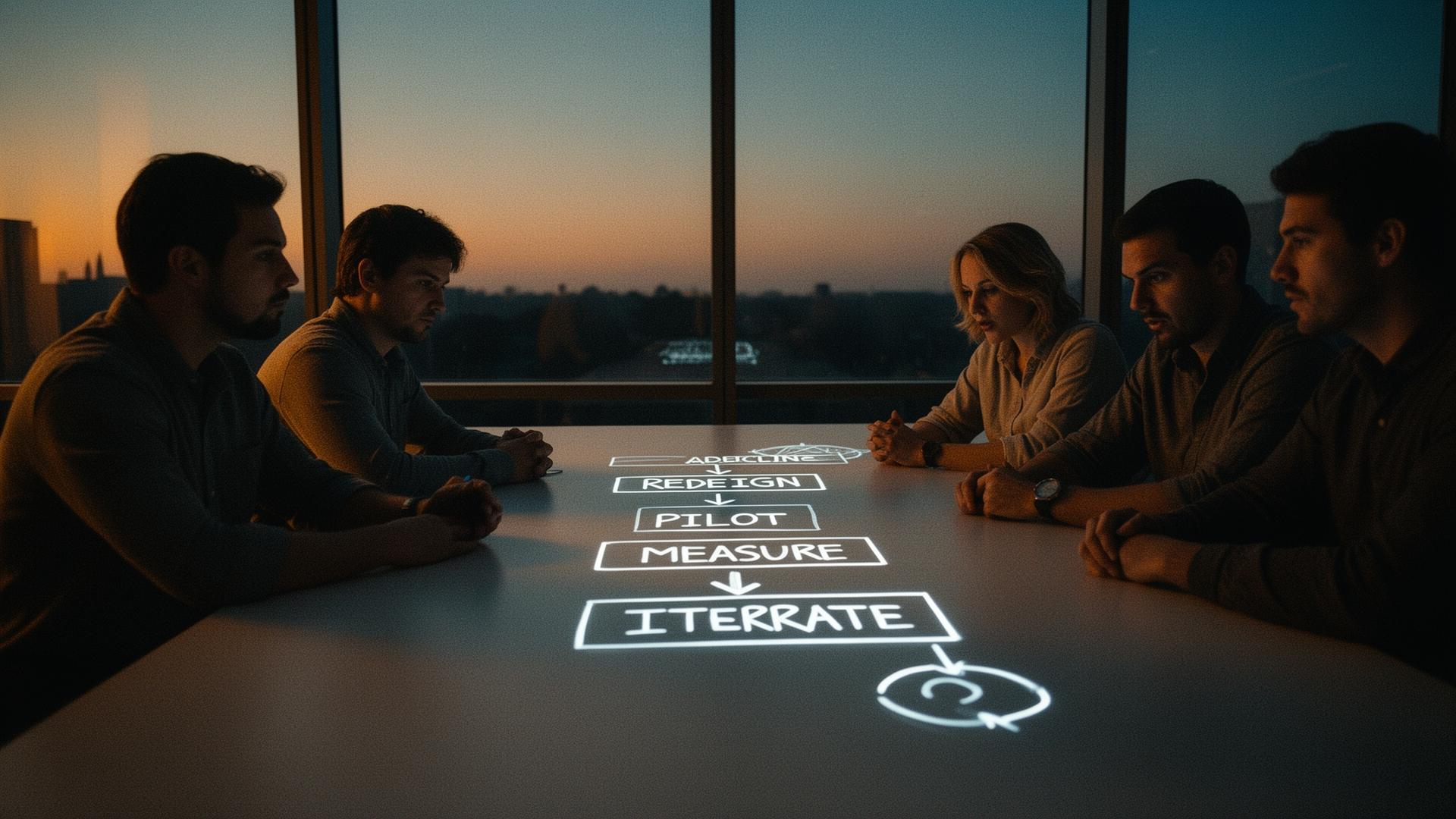
Onboarding moved from a calendar of training events to a continuous practice + measurement loop in the flow of work.
AI role-play stakeholders, rubric scoring, manager coaching prompts.
Time-to-first-deal compressed. Confidence measurable at week six, not certification week.
“The single highest-leverage intervention was making the manager visible in the loop.”
Human Performance Technology for the AI era.
Same disciplines. New surface. AI enhances human performance — it does not replace it.
Reference systems that retrieve, not memorize.
Infinite, low-stakes reps with realistic stakeholders.
Pattern-level feedback at the speed of work.
Right cue, right moment — inside the tool people are already using.
Managers stay central — AI surfaces what to coach on.
The work itself becomes the learning environment.
Transformation isn't about implementing technology.
It's about helping people perform better inside evolving systems.
Technology changes.
Human performance changes much more slowly.
The organizations that succeed understand both.
The tools change. The disciplines evolve. The starting question doesn’t.
What is preventing people from performing at their best?
Diagnose first. Design second. Deploy last.